
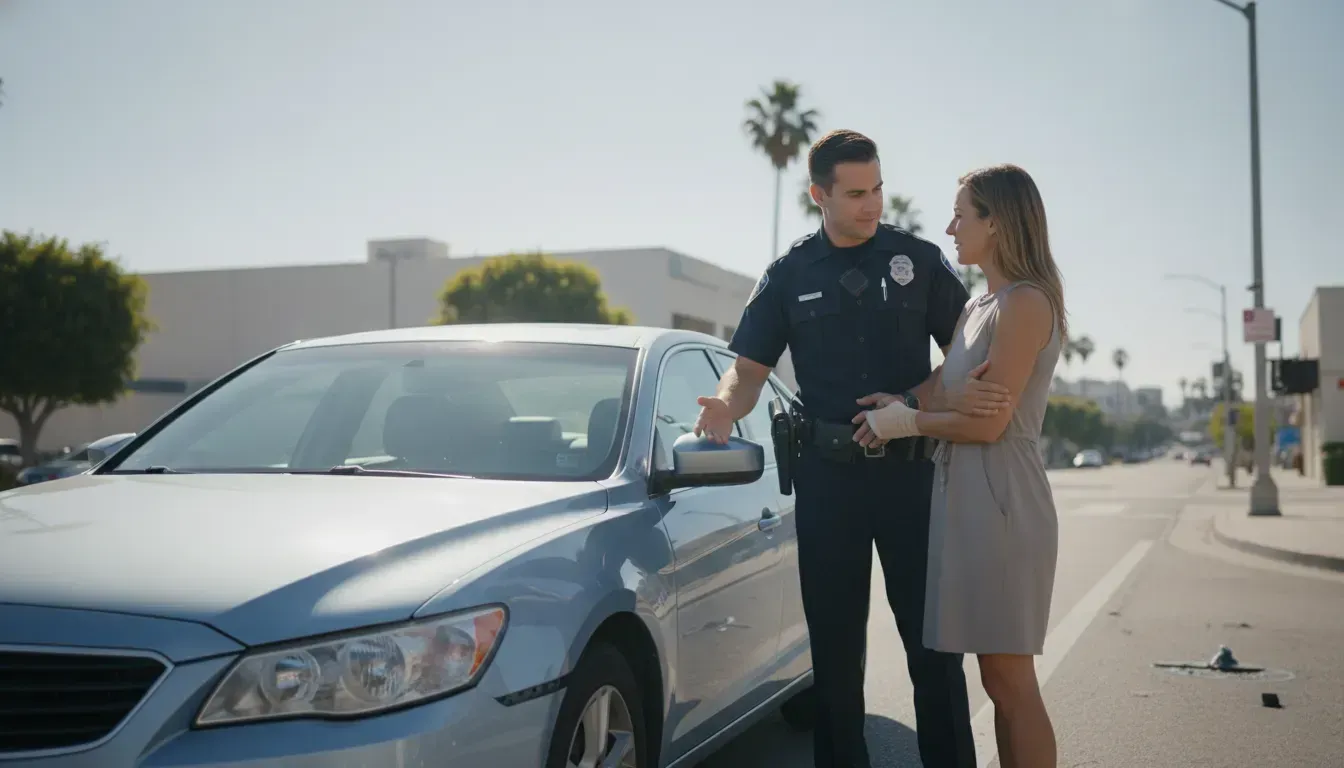
After a crash · General information
What to Do After a Car Accident in California
A step-by-step guide to what to do after a car accident in California: check for injuries and call 911, document the scene, notify your insurer carefully, seek medical attention, and consult a personal injury attorney before settling.
A car crash can leave you shaken, confused, and unsure which decision matters most. Start with safety, then protect the information that may help explain what happened. Your first steps should focus on injuries, emergency assistance, the traffic around you, and preserving basic facts before you discuss fault or a settlement.
Step 1: Check for Injuries and Call 911
The first priority after a collision is safety, not deciding who was at fault or discussing a claim. Take a breath, look for immediate danger, and focus on getting medical help when someone may be injured.
-
Check yourself and others. Ask whether anyone needs emergency medical assistance. If someone appears seriously hurt, avoid moving that person unless leaving them in place creates an immediate danger. Tell the 911 operator your location, the number of people involved, and any urgent symptoms or hazards you observe.
-
Move out of active traffic only when it is safe. If the vehicles can be moved and doing so does not put anyone at greater risk, move them out of a traffic lane. If a vehicle cannot be moved, or getting out would expose you to passing traffic, stay in a safer position if possible and wait for emergency responders. Do not put yourself in danger to take photographs or inspect damage.
-
Watch for additional hazards. Be alert for oncoming vehicles, leaking fluids, smoke, fire, broken glass, or unstable surroundings. Use hazard lights if they work and follow instructions from police, firefighters, or paramedics. Avoid arguing with another driver at the scene, especially if emotions are high.
-
Report changes in condition. A person may not immediately recognize every symptom after a stressful crash. Tell emergency personnel about pain, dizziness, confusion, or any other concern rather than trying to diagnose the injury yourself.
Once the scene is secure and emergency needs are addressed, preserve what information you safely can. The next step is documenting the scene and exchanging information without interfering with medical care or law enforcement.
Step 2: Document the Scene and Exchange Information
Once everyone is out of immediate danger, preserve as much information about the collision as you can. If you are hurt, shaken, or unable to move safely, focus on your health first and ask someone you trust to help document the scene. Do not place yourself in traffic to take a photograph.
Use your phone to photograph the vehicles and surrounding area before conditions change. Take wide shots that show the roadway and vehicle positions. Then take closer images of damage from several angles.
Include details that may help explain how the crash happened. Photograph these items:
- Damage to every involved vehicle, including areas that appear minor.
- Roadway conditions, traffic signals, signs, lane markings, and nearby intersections.
- Debris, skid marks, obstacles, weather conditions, and visibility.
- License plates and identifying features of the vehicles.
- Visible injuries, if appropriate and if this does not delay medical care.
Write down what you remember while the details are fresh. Note the time, location, direction of travel, and lane position. Ask witnesses for their names and contact information, and note nearby security cameras. Do not pressure anyone to take your side or argue about fault at the scene.
Exchange information with the other driver. Obtain the driver's name, address, driver's license information, license plate, and insurance information. If the vehicle owner is different from the driver, note that distinction as well. Keep the exchange factual and courteous. Do not guess about your speed, injuries, or responsibility, and do not sign a statement or release simply because someone asks.
When law enforcement responds, provide accurate information and describe any symptoms or damage. Keep the incident or report details with your photographs, witness information, insurance communications, and other records.
Step 3: Notify Your Insurance Company Carefully
Notify your insurance agent or company promptly after the collision, even if you are still gathering information. Start with a clear, factual account: when and where the crash occurred, the vehicles involved, whether anyone sought medical attention, and what damage you observed. Avoid guessing about speed, fault, or the extent of an injury. You can explain what you know without making a legal conclusion.
Keep a copy of everything connected to the claim. Save your policy information, claim number, photographs, repair estimates, police or collision reports, medical records, receipts, emails, letters, and notes from phone calls. Write down the date, time, and name of anyone you speak with. Organized records can make it easier to understand what has been reported and to respond consistently if questions arise.
An adjuster may ask for a recorded statement or present a release. Those requests deserve careful attention, particularly when the extent of an injury or property damage is not yet clear. Consider getting advice before making a recorded statement or signing a document that could affect your claim.
You can choose your repair shop
California law does not allow an insurer to require you to use a specific auto body shop. You may ask questions about estimates, parts, warranties, and the repair process, then choose the shop you prefer. If communication with an insurer becomes confusing or contentious, preserve the correspondence and seek guidance about your circumstances before accepting terms or signing a release.
Step 4: Seek Medical Attention Even If You Feel Fine
After a collision, your health should come before conversations about fault, repairs, or settlement. Some symptoms may not be obvious immediately, especially when stress and adrenaline make it difficult to notice how your body feels. If you develop pain, dizziness, headaches, stiffness, numbness, or any other concerning symptom, seek medical attention promptly. A qualified medical professional can evaluate you and explain what care may be appropriate. Do not attempt to diagnose yourself from an online article.
Tell the provider that your symptoms followed the collision, and describe what you are experiencing as accurately as you can. Follow the provider's instructions, attend recommended follow-up visits, and ask questions if you do not understand the treatment plan.
Keep a dedicated folder, digital or paper, for documents connected to your care. Save these items:
- Medical records, discharge instructions, and appointment details.
- Medical bills, receipts, and prescription information.
- Notes about missed work, activity limits, or changes in symptoms.
- Messages or correspondence about treatment and follow-up care.
These records help you and your legal or insurance representatives understand the accident. They also organize the expenses that followed. If treatment, transportation, or work creates practical difficulties, mention those concerns to your provider and keep records of them as well. Prompt care is not about creating a claim narrative. It is about protecting your health and maintaining an accurate record while you recover.
Step 5: Consult a Personal Injury Attorney Before Settling
Not every collision requires a lawyer. A prompt consultation can help when the next step is unclear or the insurance process becomes difficult. Consider seeking legal guidance if the other driver disputes fault, the accident report is incomplete, your injuries are serious, or an insurer pressures you to accept a quick settlement.
An insurance offer may address only the information available at that moment. Before signing a release or accepting payment, make sure you understand what claims the paperwork covers. Consider whether it may affect future medical care, lost income, property damage, or other losses. Keep copies of letters, emails, estimates, medical records, bills, and settlement documents. Avoid guessing about fault when speaking with an insurer. Give accurate facts, but do not minimize your injuries or speculate about issues you cannot know.
Legal guidance may also help when claim paperwork is confusing, multiple vehicles are involved, responsibility is shared or disputed, or evidence needs to be collected and organized. Deadlines and claim requirements can vary by the facts of the crash, so do not assume that waiting is harmless. A lawyer can review the circumstances and explain potential next steps without promising a particular result.
Mamanne Law's California personal injury help is designed around personal, attorney-led service. Benjamin Mamanne personally reviews cases and remains directly involved in the attorney-client relationship. The firm can assist with claim reporting, investigation, paperwork, insurance communication, and case resolution when appropriate. Mamanne Law offers free case evaluations, and clients pay no upfront legal fees or fees unless the firm recovers compensation. That arrangement does not guarantee that every case will recover money.
Immediately After a Car Accident in California: What to Do Next
Knowing what to do after a car accident in California includes knowing what not to do. A stressful collision can make it easy to delay care, discard useful evidence, or make statements before you understand what happened. These choices do not automatically destroy a claim, but they can make the facts harder to prove and the insurance process more difficult.
| Mistake | Better approach |
|---|---|
| Delaying medical attention because symptoms seem minor or have not appeared yet. | Seek an appropriate medical evaluation, follow care instructions, and keep bills, records, receipts, and prescriptions. |
| Failing to preserve photos, witness details, vehicle evidence, messages, or insurance correspondence. | Save copies in one place and photograph damage, roadway conditions, signs, signals, and debris when it is safe. |
| Guessing about fault, apologizing, or speculating when speaking with an insurer or another driver. | Give a truthful account limited to what you know. Avoid recorded statements or detailed legal conclusions until you understand the request. |
| Posting photos, accusations, injuries, or case details publicly. | Keep the accident and your recovery private. Public posts can be misunderstood outside their original context. |
| Signing a release or accepting an early offer before understanding the full claim. | Review the offer, expected treatment, vehicle damage, and possible future losses before signing anything that may limit your options. |
Do not assume there is one deadline for every California accident claim. Timing can depend on the type of claim, the parties involved, and the facts. Some reporting obligations may also apply soon after a collision. If you have already made a mistake, do not assume the situation is hopeless. Preserve what remains, avoid further public or speculative statements, and obtain guidance based on the specific facts.
Frequently Asked Questions
What is the first thing you do after a car accident?
Check for injuries, call 911 when anyone needs emergency help, and move out of active traffic only if it is safe. Once the scene is secure, exchange information, photograph the vehicles and roadway, and seek medical attention for symptoms.
What do you do when someone hits your car in California?
Stay calm, document the scene, and collect the other driver's identifying, vehicle, and insurance information. Notify your insurer promptly, but avoid guessing about fault or signing a release before you understand the claim. Keep copies of reports, messages, estimates, and medical records.
How long after a car accident in California can you still report it?
Notify your insurance company promptly. A California DMV report may be required within 10 days when a crash involves an injury, death, or vehicle damage above the applicable threshold. Confirm the current threshold and SR-1 instructions with the California DMV or the California Department of Insurance.
How long do I have to file a claim after an accident in California?
There is no single deadline for every accident claim. The time limit can depend on the type of claim, the parties involved, and whether a public entity is involved. Because deadlines may affect your options, preserve evidence and seek prompt case-specific legal guidance.
What should I do if I feel fine after a crash?
Monitor your condition and arrange a prompt medical evaluation if pain, stiffness, dizziness, or other symptoms develop. Follow medical guidance and keep bills, records, receipts, and prescriptions. Delayed symptoms still deserve attention, and contemporaneous records can help explain what happened.
Ready to Talk Through Your Next Step?
After a California car accident, a clear conversation can help you understand your options before you respond to an insurer or make decisions about your claim. Call or text Mamanne Law at 818-528-6376 to request a free case evaluation. You can also use the request a call back page if that is more convenient. The firm offers personalized guidance for injured people across California, with no upfront legal fees and no fee unless Mamanne Law recovers compensation.