
Articles · General information
Slip and Fall Lawsuit: What Must You Prove?
A slip and fall lawsuit is not decided only by showing that a person fell and was hurt. In California, a claim may turn on what condition caused the fall, who was responsible for the area, whether reasonable care was used, whether the responsible party knew or should have discovered the hazard, and whether it caused the injury. The surrounding facts and available evidence matter.
This overview is general information, not legal advice. Every incident is different, and a lawyer would need to review the facts and applicable law before assessing an individual claim.
What does a slip and fall lawsuit generally need to show?
A premises injury claim generally involves negligence. In broad terms, the questions can include whether a person or organization had a responsibility to use reasonable care, whether that responsibility was not met, and whether the failure was a substantial factor in causing harm. Each part needs to be considered in context; a dangerous-looking surface by itself does not answer every question.
For example, imagine a visitor slips on a wet patch near a store entrance. The fact of the fall may establish where the event happened, but other questions remain: How did the water get there? How long had it been present? Who was assigned to inspect or clean the entrance? Was there a warning? Did the condition cause the injury described? Records, witness accounts, and observations may help answer those questions, but no single item necessarily resolves the claim.
California courts use a substantial-factor framework when considering causation. For general information about California's court system and official resources, visit the California Courts website. That general resource is not a case-specific assessment and does not determine what evidence will matter in a particular dispute.
The practical point is to avoid jumping from “I fell” to a conclusion about liability—or from an early disagreement to a conclusion that no claim exists. A careful review separates what is known, what is disputed, and what still needs investigation.
Who may have been responsible for the area?
Ownership can matter, but it is not always the only issue. A landlord, tenant, store operator, property manager, maintenance contractor, or another party may have had responsibility for inspecting, cleaning, repairing, or warning about a particular area. The relevant question is often who had control over that place or condition and what duties applied—not simply whose name appears on a deed.
Consider a person who falls in a shared walkway outside several businesses. One entity may own the property, another may operate a business, and a maintenance company may handle cleaning. The visitor may not know those arrangements at the scene. A sign, lease, maintenance record, service agreement, or employee account might help clarify who handled the area. These are avenues to investigate, not assumptions about who is legally responsible.
Likewise, where a hazard sits can affect the questions. A spill inside a shop, a damaged step in a common hallway, and a broken section of an outdoor walkway may involve different inspection or repair responsibilities. Make the location as precise as possible. “By the entrance” is a start; noting which doorway, side of the path, nearby fixture, or floor transition can make later investigation more focused.
Mamanne Law's slip and fall attorneys page describes the firm's work in this area. The firm is a California personal injury practice serving clients statewide, with a primary focus on Northridge, the San Fernando Valley, and Greater Los Angeles. Its broader personal injury representation information may also help explain the kinds of claims it handles.
Why does notice of the hazard matter?
Notice is often central to an investigation. Actual notice generally means that a responsible person was told about the condition or personally saw it. Constructive notice generally concerns whether the condition was present or apparent enough that reasonable inspection could have discovered it. The precise legal analysis depends on the facts and applicable law.
Timing can change the questions. A drink spilled moments before a fall may be different from a recurring leak that left a visible wet area for a longer period. A worn stair edge that has been documented in prior maintenance requests may raise different issues from a sudden obstruction. Yet the absence of a direct complaint does not, by itself, explain whether reasonable inspection would have found the condition.
- Actual notice: Did a staff member see the condition, or did someone report it before the fall?
- Constructive notice: How long may the condition have been present, and would an appropriate inspection likely have revealed it?
- Inspection practices: Were checks scheduled or recorded, and what do any available logs show about the time and area?
- Prior history: Were there earlier complaints, repairs, recurring leaks, or similar incidents involving that location?
- Warnings and response: Was a warning placed, or was there a reasonable opportunity to block off or address the hazard?
These details can point in different directions. An inspection record may show when someone checked an area, but it may not establish everything about the condition at the moment of a fall. A witness may recall seeing a spill but be unsure how long it was there. A prior repair request may concern a nearby location rather than the exact spot. Keep distinctions clear and do not turn an uncertain recollection into a definite statement.
What evidence can help explain the scene?
Physical conditions and records may change quickly. A spill can be cleaned, an object moved, a warning sign placed, or a damaged surface repaired. If it is safe and practical, preserve what you can as soon as possible without disturbing the area or putting yourself at risk.
- Photographs and video: Capture the condition and the surrounding route. Take a wide view that shows where the hazard sits, then closer views that show its details. Include lighting, warning signs, nearby doors or fixtures, and anything that helps identify the exact location.
- Incident report: Ask whether the property prepared a report and note when and with whom you spoke. Keep any copy or reference information provided. If you do not receive a copy, write down what you were told rather than assuming what the report says.
- Witness details: Record names and contact information for people who saw the fall or noticed the condition beforehand, if they are willing to share it. Note what each person actually observed.
- Communications: Preserve emails, texts, maintenance requests, letters, and messages connected to the incident or an earlier report about the condition.
- Personal notes: Write down the date, approximate time, precise location, route taken, lighting, weather if relevant, and what happened in sequence. Separate what you saw from what someone later told you.
- Relevant items: Keep footwear or belongings that may help explain the event in their current condition. Do not alter or discard them before considering whether they could be relevant.
For instance, a photograph of a wet floor may be more useful when paired with a wider image showing that it was beside a leaking display or an entrance mat. A note that says “around 4 p.m.” is more informative if you can also explain whether the time came from a receipt, a phone record, or memory. This does not mean every detail must be perfect; it means the basis for each detail should remain clear.
Do not return to a hazardous area, confront anyone, or take pictures when doing so would be unsafe. If you believe a camera recorded the event, note the camera's location and the approximate time window. Video may be overwritten or unavailable, so a lawyer can consider whether a prompt preservation request is appropriate. Do not assume footage exists or that it will show the entire incident.
How do injury and causation fit into the analysis?
A claim also involves a connection between the alleged condition and the harm claimed. A person may feel pain or seek treatment after a fall, but an evaluation can still examine the event timeline, symptoms, relevant records, and whether another explanation is raised. A careful, accurate account is more useful than trying to make the facts fit a particular theory.
Seek appropriate medical attention and follow qualified health professionals' guidance. Evidence gathering should not delay care. Keep copies of relevant appointment summaries, bills, prescription or treatment records, work-absence information, and receipts for out-of-pocket expenses. Organize them by date so the sequence is easier to understand.
Be precise when describing the timeline. If symptoms began immediately, say so; if you noticed them later, record that instead. If you are uncertain about a date or amount, mark it as approximate rather than guessing. Do not exaggerate, alter a record, or leave out a relevant fact because it seems inconvenient. If there are gaps in treatment or records, explain what you know without filling those gaps with speculation.
Medical and expense records are private and can contain sensitive details. Keep them secure and share them thoughtfully. A lawyer can discuss what information may be relevant to a claim and how records may be handled. Legal representation does not replace care from a qualified health professional.
Can a person's own actions affect the case?
California follows a comparative-fault approach, so evidence may raise questions about whether more than one person contributed to an incident. Depending on the circumstances, a dispute could involve the route taken, visibility, lighting, footwear, an obstruction, a warning sign, or whether the condition could reasonably have been avoided. The effect of any factor depends on the evidence and applicable law.
This does not mean that one detail—such as looking at a phone or not noticing a warning—automatically eliminates a claim. It means that the detail may be considered with the rest of the circumstances. For example, a warning sign could be visible from one direction but hidden behind a display from another. A person may have used the usual route but been unable to see a low obstruction in dim light. Those facts need to be described accurately and evaluated together.
If someone asks what happened, explain what you remember without guessing. Avoid adopting another person's conclusion about fault before you have had a chance to review the facts. If an insurer asks for a recorded statement or a broad release, consider getting case-specific legal guidance before agreeing. The right response depends on the circumstances, and this article does not advise you what to say in an individual claim.
What steps can you take after a fall?
- Address immediate safety. Move away from an ongoing danger if you can do so safely. Seek appropriate medical care and ask someone you trust for help if needed.
- Report the incident. Tell a property representative what happened and ask whether an incident report will be created. Give a factual account, and note the date, time, and person you spoke with.
- Record the location and condition. If safe, take photographs or video from more than one distance. Include signs, lighting, nearby landmarks, and the path you used.
- Identify witnesses. Ask willing witnesses for their names and contact details. Write down which parts they personally saw, rather than relying on a general impression.
- Preserve paperwork and communications. Keep receipts, messages, report details, and treatment or expense records in one place. Make a simple dated list so you can find materials later.
- Write a timeline. Record what happened before, during, and after the fall while your memory is fresh. Identify uncertainty plainly and update the timeline if you later find a record that clarifies a detail.
- Get a case-specific review. Ask a lawyer about who may have controlled the location, what notice evidence could matter, what records may be available, and what deadlines might apply.
These steps cannot guarantee that evidence will prove a claim. They help preserve information that may be difficult to recreate later. Do what is reasonable and safe; if a photo, document, or witness detail is unavailable, note that fact rather than taking a risk to obtain it.
How do the main questions compare?
| Question | What it may clarify | Examples of information |
|---|---|---|
| What condition caused the fall? | The physical hazard and its location | Photos, scene notes, witness descriptions, floor or walkway details |
| Who controlled the area? | Which person or organization may have had maintenance or warning responsibilities | Property contacts, management information, maintenance arrangements |
| Was there notice? | Whether the responsible party knew or reasonably could have discovered the condition | Reports, inspection logs, prior complaints, repair history |
| Did the condition cause harm? | Whether the fall and claimed injury are connected | Incident timeline, treatment records, contemporaneous notes |
| Did other factors contribute? | Whether responsibility may be disputed or shared | Lighting, warnings, visibility, route, witness accounts |
Use the table as an organizing checklist, not as a scorecard. A missing record does not automatically prove or disprove a claim, and a strong photograph does not answer every legal question. The value of each item depends on its source, timing, reliability, and connection to the incident.
How can you prepare for a case evaluation?
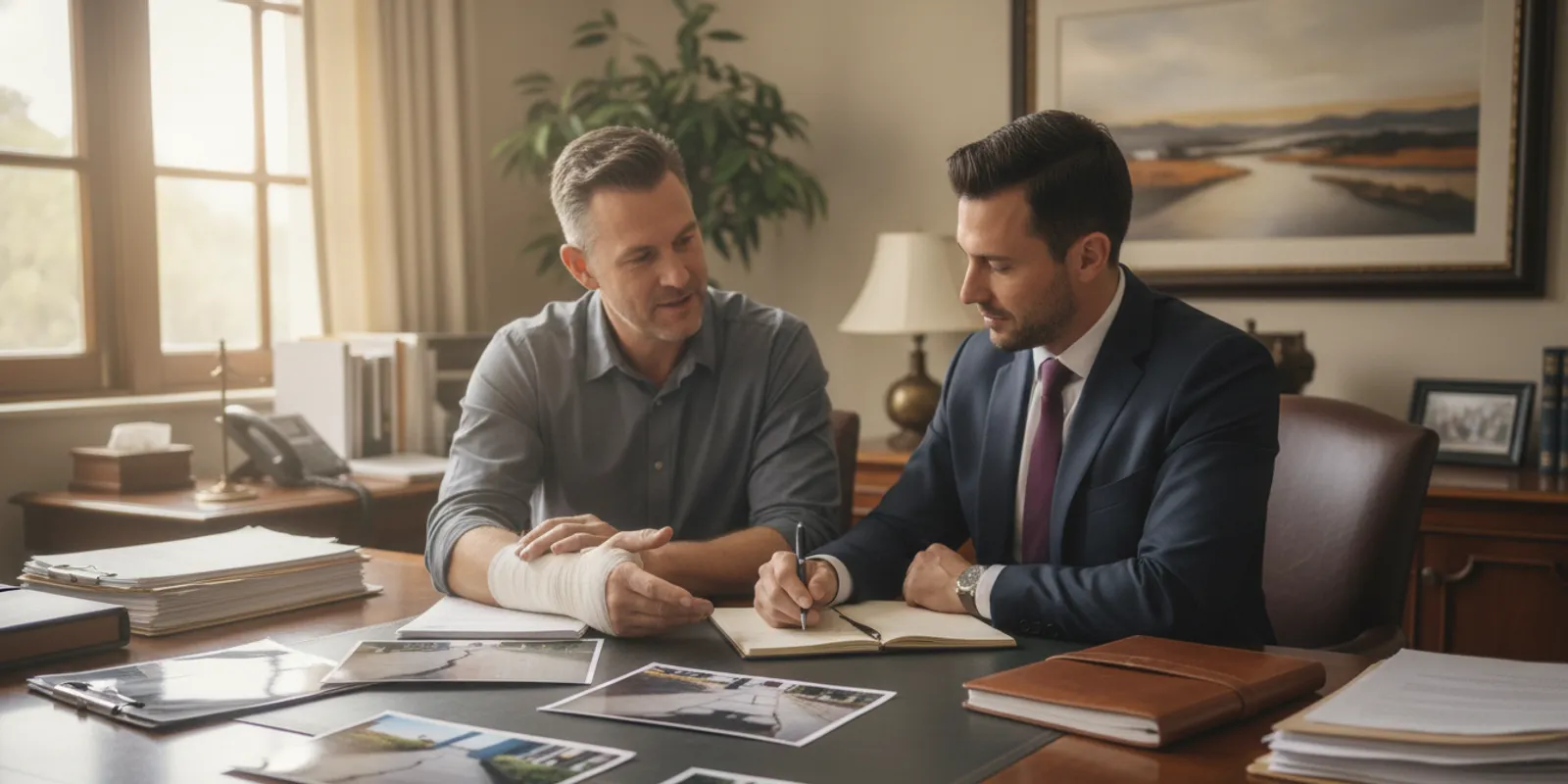
A first conversation can start with a simple account: where and when the fall occurred, what condition you noticed, how you reported it, who may have seen it, and what happened afterward. You do not need to have every document in hand before asking questions. If you do have photographs, a report number, witness details, or basic treatment and expense records, organizing them by date can make the conversation clearer.
It can also help to list what you do not know. For example: “I do not know when the spill started,” “I am not sure who maintained the walkway,” or “I do not know whether a camera recorded the entrance.” Clear unknowns give the lawyer specific issues to assess and reduce the risk of presenting a guess as a fact.
Useful questions to bring include: Who may have had control over the exact area? What evidence could help establish when the condition appeared? Are there records or video that may need to be preserved? What deadlines should I be aware of? How will updates and decisions be communicated? Answers will depend on the facts, and a case evaluation should not be treated as a promise of a particular result.
Mamanne Law describes its work as supporting clients through claims reporting and investigation, paperwork, insurance communication, and case resolution. Benjamin Mamanne is directly involved in cases. The firm serves clients throughout California, with a primary focus on Northridge, the San Fernando Valley, and Greater Los Angeles; consultations may be virtual, and service is available in English and Spanish. Learn more about Mamanne Law or read about Benjamin Mamanne.
The firm's personal injury FAQs provide additional general information. If you are still gathering details, you can also use the firm's request-a-call-back page to start a conversation. Fee arrangements should be discussed directly so you understand their terms. Mamanne Law states that clients pay no upfront legal fees and pay nothing unless the firm recovers compensation; no outcome is guaranteed, and not every case results in a recovery.
Frequently asked questions
Does a fall automatically mean I can bring a lawsuit?
No. A fall and an injury do not, by themselves, establish that another party failed to use reasonable care. The condition, control of the property, notice, causation, and other facts need review.
What if the hazard was cleaned up before I took a picture?
Write down what you remember and when you made the note, identify witnesses, and preserve any incident report or communication. Other information, such as inspection records or video, may be relevant, but it may not exist or be available in every situation.
What if I do not know who owned or maintained the property?
You can still ask for a case-specific review. Share the exact location and any business, building, or property information you have. Avoid guessing about ownership or responsibility; those arrangements may require investigation.
How long do I have to take action?
Deadlines can vary based on the parties and circumstances, including whether a public entity may be involved. Do not use a general article to calculate a deadline. Seek case-specific legal guidance promptly so the applicable time limits can be considered.
Should I keep every document related to the incident?
Preserve relevant records such as photographs, communications, receipts, incident-report details, and treatment or expense documents. Keep them organized and unaltered. A lawyer can help assess which materials relate to the questions in your situation.
Careful documentation and a review of responsibility, notice, and causation can help clarify the questions a California slip and fall lawsuit may raise.