
Articles · General information
How Is Fault Decided in a California Rear-End Crash? | Rear End Accident Fault California
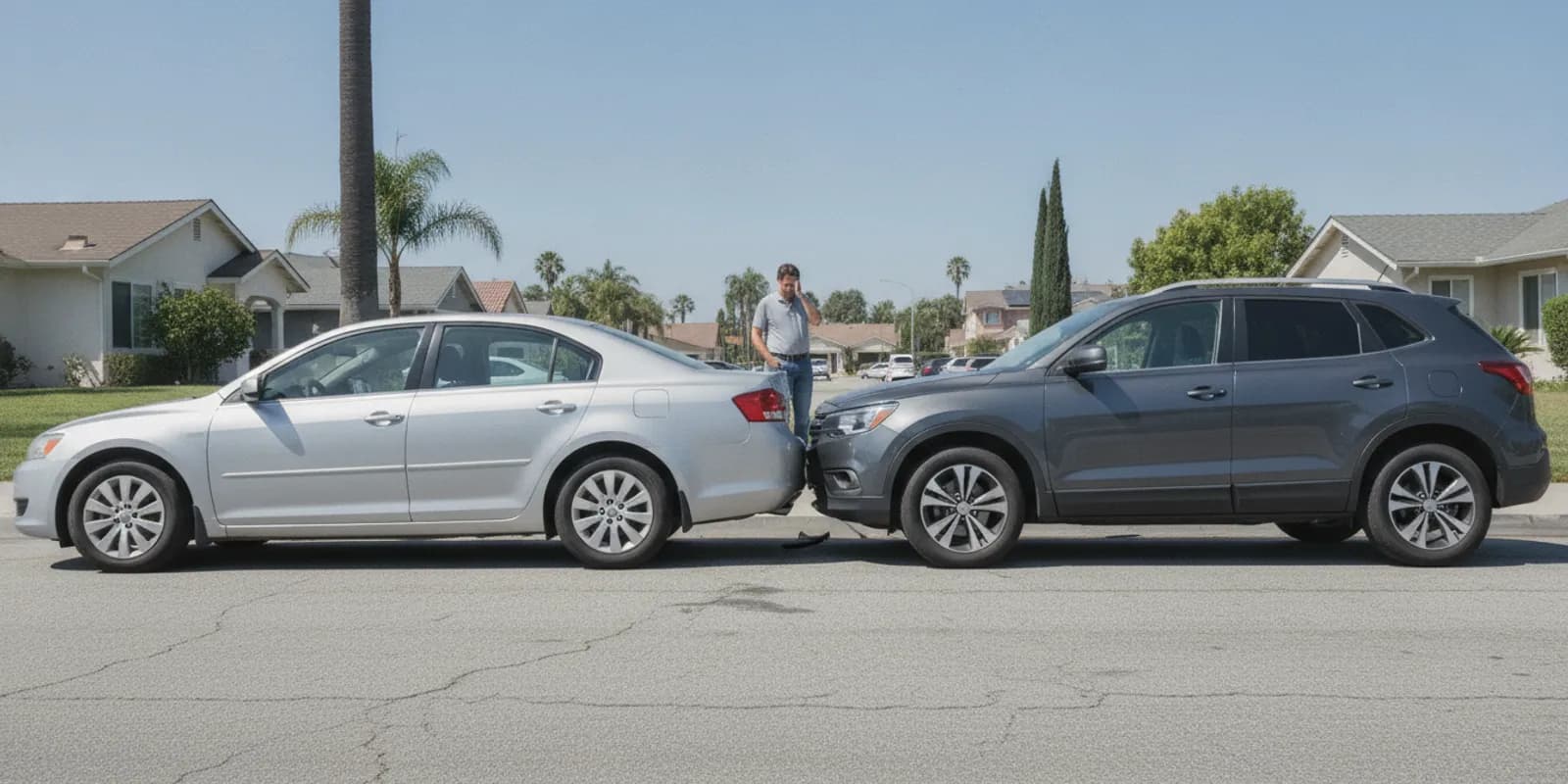
Understanding rear end accident fault california rules can be difficult immediately after a collision. Many people assume the driver in back is automatically responsible. Following too closely or failing to stop can support that conclusion, but the facts may point to another driver, more than one driver, or a different cause. The evidence, the injuries, and the conduct of each person matter.
This article explains how responsibility is reviewed after a rear-end crash in California. It is general information, not legal advice, and it cannot determine the result of a particular claim. If you were hurt in Northridge, the San Fernando Valley, Greater Los Angeles, or elsewhere in California, a conversation with a California car accident attorney can help you understand what information may be important.
Is the rear driver always at fault in California?
No. The rear driver is often investigated because a driver has a duty to operate safely, maintain a reasonable following distance, and respond to traffic conditions. A rear impact may suggest that the following driver was distracted, traveling too fast, or too close to stop in time. But a presumption or initial impression is not the same as a final decision about fault.
For example, a lead driver may stop suddenly without a reasonable traffic-related explanation, reverse into another vehicle, change lanes into the path of a vehicle, or have a brake light that was not working. A third vehicle may force one car into another. Poor road conditions, an obscured traffic signal, or a commercial vehicle’s conduct may also require investigation.
California generally uses comparative responsibility principles. That means the conduct of more than one person may be considered when a dispute involves an injury claim. The final analysis depends on the particular facts and available proof. A public explanation of this issue is also available in Is the Rear Driver Always at Fault in California?. Because that source is general information, it should not replace an individualized review.
What facts are reviewed after a rear-end crash?
Fault is not decided from the position of the vehicles alone. An investigation may examine what happened before impact, how the collision occurred, and whether the claimed injuries are connected to the crash. Useful information can include:
- Traffic conditions: The speed and flow of traffic, weather, lighting, lane markings, nearby intersections, and whether vehicles were stopped or moving.
- Driver actions: Following distance, speed, braking, lane changes, signaling, distraction, impairment, and whether a driver had enough time to react.
- Vehicle condition: Brake function, tires, lights, visibility, damage patterns, and whether a mechanical problem contributed to the impact.
- Collision location: The point of impact, final resting positions, debris, skid marks, and the direction of movement.
- Statements: What drivers, passengers, witnesses, police officers, insurers, or other people said about the event.
- Injury and treatment records: Symptoms reported after the crash, examination findings, treatment recommendations, and the effect on ordinary activities.
Photographs and video can be especially important when vehicles are moved before an inspection. Take pictures only from a safe location. Include the vehicles, surrounding lanes, traffic controls, visible damage, road surface, and relevant lighting conditions when possible. Do not place yourself in traffic to obtain a picture.
How can the collision evidence change the initial impression?
A rear impact can look simple while the sequence is not. Consider a driver who is traveling behind a vehicle at a normal distance. If another vehicle abruptly cuts in front and stops, the driver behind may have little time to respond. The damage may still show a rear-end impact, but the lane change and timing could be central to the responsibility analysis.
Likewise, a chain-reaction crash may involve several impacts. The first impact may push one vehicle into the next. The second impact may be caused by a different driver’s failure to stop. The order of impacts, damage locations, witness accounts, event data, and vehicle positions may help explain what happened.
Statements made at the scene can also be incomplete. A person may be frightened, in pain, or unsure which movement caused the collision. It is sensible to exchange required information and cooperate with emergency responders, but avoid guessing about fault. Do not admit responsibility merely to end an uncomfortable conversation. Describe what you observed accurately and preserve the information you have.
What evidence may help determine rear-end crash responsibility?
Start by preserving information rather than trying to prove the entire case yourself. A useful record may include:
- Scene photographs and video. Photograph the vehicles, roadway, signs, signals, lane lines, debris, and nearby conditions when it is safe.
- Witness information. Write down names and contact information for people who saw the collision or its immediate aftermath.
- Official records. Keep the incident number and request available reports or other records through the appropriate agency.
- Vehicle information. Save registration, insurance, repair, towing, and rental records. Do not discard damaged parts or authorize major repairs before discussing preservation when a dispute is likely.
- Digital information. Preserve dash-camera footage, phone photographs, nearby business-camera information, navigation records, and relevant messages. Some recordings may be overwritten quickly.
- Medical information. Follow medical instructions, keep appointment records, and describe symptoms honestly. Do not minimize pain because it began after the first day.
- Activity information. Note missed work, changes to household tasks, driving, sleep, exercise, and other ordinary activities without exaggerating.
Do not alter photographs, delete messages, or post about the crash. A lawyer may help identify evidence that should be requested or preserved. Mamanne Law describes its support as extending from claims reporting and investigation through paperwork, insurance communication, and case resolution. You can learn more about the firm’s personal injury representation and its attorney-led approach on the website.
How does California comparative fault affect a rear-end injury claim?
When more than one person may have contributed to an accident, the responsibility analysis may be divided rather than treated as all-or-nothing. A driver may be found partly responsible based on the conduct supported by the evidence. The percentage and legal effect depend on the facts and the issues involved.
This is why an injured person should not assume that a disputed fact ends the inquiry. A lead driver’s conduct, a following driver’s conduct, a third driver’s conduct, and a vehicle or roadway condition may all need to be examined. The same evidence can also matter differently to liability, injury causation, and the documentation of losses.
Do not calculate a claim’s value from a general online example. No one can responsibly promise a recovery without reviewing the collision, medical information, insurance coverage, and other facts. Instead, organize what happened and ask specific questions about the next steps.
What should you do after a California rear-end crash?
Your immediate priorities are safety, medical attention, and accurate documentation.
- Move to a safe place if you can do so without creating another hazard.
- Call emergency services when anyone may be injured or traffic creates a danger.
- Exchange identifying and insurance information when it is safe and appropriate.
- Seek medical evaluation for symptoms, including symptoms that develop later.
- Report the collision to your insurer as required, but do not speculate about responsibility or the extent of injuries.
- Keep copies of reports, photographs, correspondence, bills, prescriptions, and appointment information.
- Be cautious with recorded statements, releases, and settlement documents before you understand what they address.
- Ask an attorney about deadlines that may apply to your situation. Different claims and defendants can involve different timing rules.
If the crash involved a delivery vehicle, truck, rideshare vehicle, motorcycle, bicycle, or pedestrian, additional facts and insurance questions may arise. Mamanne Law provides information about truck accident claims, rideshare collisions, and pedestrian injuries. The correct focus is the event that occurred, not a label applied before the evidence is reviewed.
Which facts can make rear-end crash cases more complicated?
| Situation | Questions the evidence may address | Information to preserve |
|---|---|---|
| Sudden stop | Why did the lead vehicle stop, and were traffic conditions visible? | Traffic signals, lane position, photos, video, and witness details |
| Lane change before impact | Which vehicle entered the lane, when, and with what warning? | Dash-camera footage, nearby cameras, vehicle damage, and witness accounts |
| Chain-reaction collision | What was the order of impacts, and which impact caused each condition? | Vehicle positions, damage photographs, reports, and inspection information |
| Mechanical concern | Did brakes, tires, lights, or another condition affect the crash? | Maintenance records, repair records, photographs, and damaged parts |
| Commercial or rideshare vehicle | What drivers, vehicles, companies, and insurance policies may be involved? | Company information, trip details, identifying information, and correspondence |
The table is a starting point, not a checklist that determines responsibility. Evidence can be lost, misunderstood, or viewed differently by the people involved. Early organization may make it easier to explain the sequence to an attorney or insurer.
How can a personal injury lawyer help review the crash?
A personal injury lawyer may help organize the timeline, identify potential sources of evidence, communicate with insurers, and evaluate how the collision and injuries should be documented. The lawyer may also explain what information is missing and what questions should be addressed before a claim moves forward.
For Mamanne Law, the firm’s stated model is attorney-led and personalized. Benjamin Mamanne is described as personally involved in case communication, strategy, and the process from investigation through resolution. That approach can be useful for a person who wants clear updates and a direct point of contact rather than trying to manage every request alone. Learn more about Benjamin Mamanne and the firm’s approach to client representation.
The firm serves California clients and offers communication in English and Spanish. Consultations may be arranged virtually or through other options described by the firm. The fee arrangement should always be discussed directly and confirmed in the representation agreement; Mamanne Law states that clients pay no upfront legal fees and pay nothing unless the firm recovers compensation. That statement does not mean every claim succeeds or that a particular result is assured.
Frequently Asked Questions
What if I was hit from behind but the other driver denies responsibility?
Preserve photographs, witness information, reports, vehicle records, and medical documentation. Avoid arguing at the scene or changing your account to match another person’s version. An attorney can help compare the statements with the physical and digital evidence.
Can the lead driver share responsibility in a rear-end collision?
Yes, depending on the facts. A sudden unexplained stop, unsafe lane change, reversing movement, visibility issue, or other conduct may be relevant. The evidence must support the specific explanation rather than relying only on the location of the damage.
Should I speak with the other driver’s insurance company?
You may need to report the collision and provide basic information, but be accurate and avoid guessing about fault, future treatment, or the full effect of an injury. Before signing a release or giving a recorded statement, consider asking an attorney what the request means for your claim.
What if I feel fine immediately after the crash?
Some symptoms may develop later. Monitor your condition, seek appropriate medical attention, and follow the provider’s instructions. Keep records of symptoms and changes to ordinary activities, and do not claim an injury that you do not have.
When should I contact a California personal injury attorney?
Consider contacting an attorney when an injury, disputed responsibility, multiple vehicles, commercial driver, insurance issue, or significant evidence question makes the situation difficult to manage. Prompt advice may help identify information that needs to be preserved, but it does not guarantee a particular outcome.
What is the next step after a rear-end crash?
Write down your best account while the sequence is fresh, preserve the available evidence, attend to your health, and gather your insurance and collision records. If you want to discuss the circumstances with an attorney-led California personal injury firm, contact Mamanne Law so the relevant facts can be reviewed and the possible next steps explained.