
Articles · General information
How Can You Handle Property Damage and Insurance After a California Car Accident?
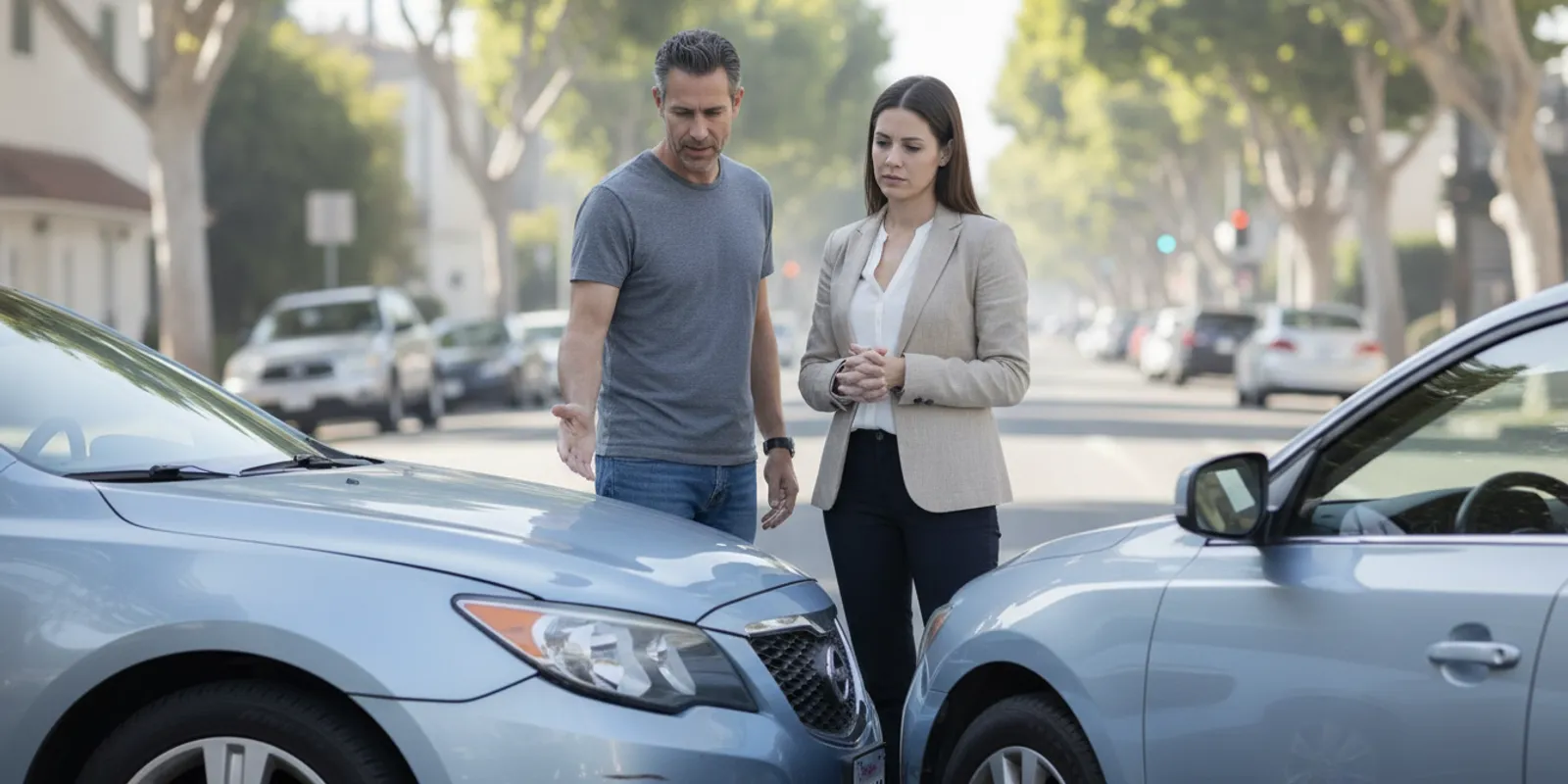
After a California crash, you may need to address repairs to your vehicle and injuries to you or a passenger at the same time. A property damage and injury claim california car accident situation can involve overlapping facts, but the two parts are not identical: the vehicle claim concerns physical damage and related costs, while an injury claim concerns harm to a person. They may proceed together or on different timelines, depending on the circumstances and the available information.
Can you handle vehicle damage and injury claims together?
Often, both issues can be raised with the relevant insurer or insurers after one collision. That does not necessarily mean there is one combined form, one investigation, or one decision covering everything. Vehicle damage and bodily injury are distinct parts of the loss. Each can involve different records, questions, and decisions about when the information is complete enough to discuss resolution.
For example, the vehicle portion may involve photographs, a repair estimate, inspection, towing or storage records, and questions about repair or replacement. The injury portion may involve medical records, treatment information, missed work documentation, and questions about how the collision affected daily life. Some evidence, such as the collision report or scene photographs, may be relevant to both.
One part may be ready to address before the other. A vehicle may be inspected quickly while an injured person is still receiving care and does not yet know the course of treatment. Conversely, a repair dispute or a question about who owns the vehicle may delay the property portion even as other injury-related information is being gathered. The sequence depends on the facts and the people involved.
Do not assume that resolving one part automatically resolves the other, or that an insurer will keep them open in the way you expect. Before signing a release, accepting a payment, or agreeing that a matter is settled, read the document closely and understand what it covers. If the language is unclear, ask for an explanation and consider getting legal advice before deciding. This article offers general information, not advice for a particular claim.
How are property damage and injury claims different?
Both parts may arise from the same collision, but the evidence and practical questions differ. Keeping the tasks distinct can help you see what is known, what is still being investigated, and what needs follow-up. It can also help prevent a repair discussion from obscuring an unresolved injury issue.
| Issue | Vehicle property damage | Injury-related claim |
|---|---|---|
| What it concerns | Physical damage to a vehicle and related documented expenses | Physical harm and its documented effects on the injured person |
| Common records | Photos, inspection notes, repair estimates, invoices, towing and storage records | Medical records, treatment records, work information, and notes about day-to-day effects |
| Questions to clarify | Who owns the vehicle, where it can be inspected, and how repair or replacement is being considered | What happened, what care has occurred, and what information is still developing |
| Possible timing | May move forward after inspection and review of damage information | May require continued documentation while care and recovery progress |
| Before agreeing to resolve it | Check what damage and expenses the proposed agreement includes | Check the release carefully and understand which injury issues it addresses |
This comparison is a practical guide, not a promise that an insurer will handle a particular matter in a particular way. Policy terms, the facts of the collision, and the parties involved can affect the process. When questions about coverage, fault, or the scope of a proposed agreement arise, get answers specific to the situation rather than relying on assumptions.
What should you document for the vehicle damage?
Make a clear record of the vehicle’s condition and the steps taken after the collision. If it is safe to do so, photograph the damage from several angles and include wider images that show where the damage is located. Keep the original photos and note when they were taken. Save repair estimates, inspection records, invoices, towing receipts, and written communications with an insurer or repair facility.
Write down where the vehicle is being kept and whether it can be driven. If the vehicle is not safe to operate, do not drive it simply to make an inspection easier. Ask the insurer or the relevant repair professional how to arrange inspection and how to document any movement or storage. Keep copies of messages and note the date, the person you spoke with, and what follow-up was requested.
Do not discard damaged parts, authorize repairs, or move the vehicle in a way that could affect an inspection without first understanding what is needed in your circumstances. This is not a universal rule about every repair; it is a reason to confirm the process with the relevant insurer or a qualified adviser. If repairs have already started, keep the estimate, photographs taken beforehand, invoices, and any revised estimate.
When the vehicle belongs to someone else, is leased, financed, used for work, or has more than one possible owner, identify that fact early. The person who reports the collision may not be the only person whose information is needed. Keep registration, ownership, and insurer details together so that you can respond accurately to reasonable requests.
What should you keep for an injury claim?
Prioritize your well-being and get medical attention when you need it. Follow the directions of your health care providers, and keep copies of records and bills that are available to you. Note appointments, missed work, practical limitations, and changes in routine in a simple dated log. These notes can help you remember details later; they do not replace medical records or professional evaluation.
Save correspondence from insurers and avoid guessing when you do not know an answer. If asked to provide information, take time to understand the question and check relevant documents. Be accurate. If the request is unclear, ask what is being requested and why. A request for information does not require you to speculate about the cause, extent, or future course of an injury.
Keep injury-related records separate from vehicle paperwork, but make a note of shared facts such as the collision date, location, and other people involved. A simple folder, paper or digital, can include a timeline, contact information, claim references, photos, and a list of items you are waiting for. Avoid editing original photographs or discarding versions of documents; preserve originals where possible.
Insurance conversations can raise different questions depending on whether you are speaking with your own insurer or another party’s insurer. Those roles and policy terms may differ. You can ask who the person represents, what the request relates to, and whether the conversation is being recorded. For more context about responding to an insurer after a collision, see our guide to next steps after a crash that was not your fault.
How can you keep both parts organized?
Use one master timeline, then keep separate lists for vehicle and injury follow-up. Record the date of each call or message, the contact’s name and organization, the question asked, documents sent, and any promised next step. If you leave a message, note that too. These details make it easier to follow up without relying on memory.
- Set up two folders. Label one for vehicle damage and one for injury and medical records. Keep shared collision documents in a clearly identified common section or save copies in each folder.
- Track open questions. List what has not been answered, who is expected to respond, and when you plan to check in. Do not treat a verbal estimate of timing as a guarantee.
- Keep copies. Save what you send and note the date and delivery method. Keep originals of important records unless an appropriate recipient specifically needs them.
- Review forms before signing. Identify whether a document concerns vehicle damage, injury, or both, and ask for clarification if the scope is not clear.
- Update your contact details. Tell relevant contacts if your mailing address, email, or phone number changes, and keep a record of the update.
If you are unsure what information a document requests, do not fill gaps with guesses. Ask the sender to explain the item, request a copy you can review, or discuss the question with an attorney. Clear written follow-up can prevent confusion about what was submitted and what remains outstanding.
How should you manage insurance communications about both claims?
First, identify which insurer you are contacting and the capacity in which you are speaking. Your own insurer and another driver’s insurer may have different roles under the relevant policies. Do not assume that one insurer has the same information as another, or that telling one company something automatically updates every claim file. Keep a separate contact record for each company, including its claim reference number and the name and contact details of the person handling the matter.
When you send documents, make a brief cover note that identifies what is attached and which issue it concerns. For example, state that an estimate relates to vehicle repairs or that a record responds to a particular written request. Do not add conclusions you cannot support. If a representative asks you to provide information that you do not have, say so rather than estimating or filling in a missing detail from memory.
Ask how the insurer wants documents delivered and whether there is a secure method for sending sensitive information. Keep a copy of the exact materials sent, the date, and any confirmation of receipt. If a conversation includes a new request or proposed next step, write down the details afterward and ask for written confirmation when the request is important or unclear.
Be cautious about treating a discussion of repairs as a complete explanation of your options. If the representative discusses a payment, ask which costs it is meant to address and whether a written agreement or release is involved. If you are unsure about the meaning or effect of the answer, pause and seek clarification before deciding. The facts and policy language matter, and general information cannot interpret a specific policy or document.
What if the vehicle issue is resolved before the injury issue?
A vehicle discussion may reach a decision before the injury picture is fully documented. That timing alone does not tell you what the paperwork means for any separate issue. Read every release, settlement document, or payment explanation carefully. Look for language identifying the claims or parties covered, and do not assume a document is limited to repairs just because the conversation focused on the car.
Ask the insurer to explain the effect of a proposed agreement in writing if you are uncertain. If the document could affect an injury claim or other rights, consider speaking with a lawyer before you sign. A lawyer can review the actual document and circumstances; a general article cannot determine the effect of a particular release.
Likewise, do not let an unresolved repair question lead you to assume that every other part of the matter is paused. Keep asking what remains open, what information is needed, and what the next step is. If you are making a decision about one part, be clear about whether it addresses only that part or more.
What can make the process more complicated?
Several circumstances can make coordination less straightforward. There may be more than one vehicle or insurer, a disagreement about how the collision happened, uncertainty about vehicle ownership, or a question about whether the vehicle can be repaired. A person may also be dealing with continuing medical care while an insurer asks for information on a different schedule.
Evidence may need to be gathered from multiple sources. Photos, witness details, a collision report, repair records, and communications can each add a piece of context. Not every document exists in every collision, and the absence of one item does not by itself determine what happened. Make a list of what is available and what you are trying to obtain, then follow up through appropriate channels.
In California, reporting requirements can depend on the facts. The California Department of Insurance’s accident guidance says to notify your agent and/or insurance company promptly and describes a reporting requirement for certain injury or vehicle-damage situations. Review that guidance and confirm what applies to your situation. Do not rely on an online summary alone to decide whether a specific report is required.
If you want to learn what information may be helpful when speaking with counsel, our guide to preparing for a lawyer consultation offers a practical starting point. You can also review the firm’s California car accident representation page to learn about help with claims reporting, investigation, property damage, and insurance discussions.
When may it help to talk with a car accident attorney?
Consider getting legal guidance if you are injured and uncertain how the vehicle and injury portions fit together, if an insurer asks you to sign a broad release, or if you cannot get a clear explanation of what a payment or document covers. It may also help when responsibility is disputed, several parties or policies are involved, or communication about one part of the matter seems to affect another.
An attorney can review the available facts, explain the possible significance of documents, help organize investigation, and communicate with insurers as appropriate. The attorney’s role and the work needed depend on the case. No one can responsibly promise a particular outcome without evaluating the facts, and even an evaluation cannot guarantee what an insurer or other party will do.
At Mamanne Law, Benjamin Mamanne is personally involved in each case from the initial recorded statements and client communication through case strategy. The firm describes its work as supporting clients through claims reporting, investigation, property damage, medical-treatment coordination, paperwork, insurance discussions, and case resolution. Learn more about Mamanne Law’s approach or Benjamin Mamanne. The firm serves clients across California, with a primary focus on Northridge, the San Fernando Valley, and Greater Los Angeles; see the California counties served.
The firm’s representation is described as contingency-based: clients pay no upfront legal fees and owe no legal fee unless the firm recovers compensation. The terms should be discussed and confirmed for any specific representation. Consultations can be arranged in person or virtually, and English and Spanish service is available. For common general questions, visit the personal injury FAQs.
Contact Mamanne Law to discuss your situation
Frequently Asked Questions
Can I open a vehicle damage claim while an injury claim is still developing?
They may be handled on different timelines, but the details depend on the collision, insurance arrangements, and documents involved. Keep the issues clearly identified and understand what any proposed agreement covers before signing it.
Will fixing my car end my injury claim?
Not necessarily. Repair discussions and injury-related issues are distinct, but paperwork can cover different matters. Read a release or settlement document carefully and ask for an explanation if you are not sure what it resolves.
What records should I keep after the collision?
Keep photos, estimates, repair and towing records, insurer correspondence, medical records and bills available to you, work documentation, and a dated timeline. Organize vehicle and injury materials separately while preserving shared collision details.
Should I speak with an insurer before I understand the request?
You can ask who the person represents, what information is being requested, and whether the conversation is recorded. Be truthful and avoid guessing. If you are uncertain about a document or statement, consider getting advice before responding.
What is a practical next step?
Start by separating vehicle records from injury records, writing down open questions, and keeping copies of every communication. Before agreeing to resolve either part, make sure you understand the scope of the document and how it relates to the other issues. If you are injured or need help evaluating your options, contact an attorney for a discussion based on the facts of your situation.