
Articles · General information
Lane Splitting Motorcycle Accident California: What Riders Should Know
A lane splitting motorcycle accident in California can leave riders with immediate safety concerns and difficult questions about responsibility. Lane splitting alone does not decide who caused a collision; the sequence of events, visibility, speed, traffic movement, and conduct of everyone involved matter. This guide explains what to document and how to organize the facts.
What does lane splitting mean in California?
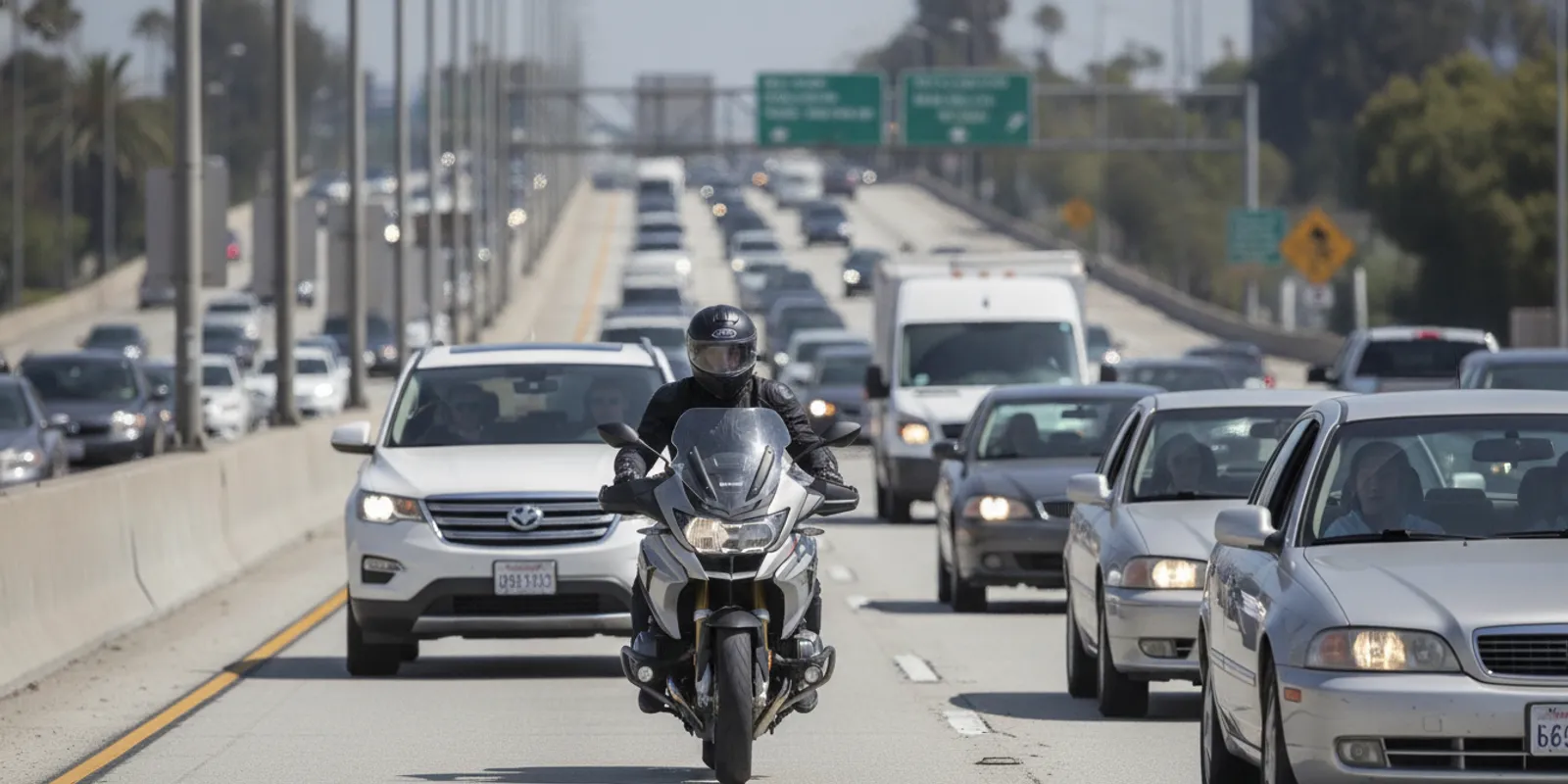
Lane splitting generally describes a motorcycle traveling between rows of stopped or moving vehicles traveling in the same direction. California permits lane splitting. That does not mean every particular maneuver is safe, nor does legal permission automatically determine fault after a crash. A careful review looks at the circumstances, including the movement and position of vehicles and what each road user could reasonably perceive.
The California Office of Traffic Safety published research examining lane-splitting and collision records. The report provides background, not a decision about any individual case. See the California Office of Traffic Safety report on motorcycle lane-splitting and safety.
For an injured rider, it is useful to keep three questions separate: Was the rider lane splitting? What specific actions immediately preceded impact? What evidence supports each account? Treating these as distinct issues avoids jumping from one fact to a conclusion about the whole collision.
How might lane splitting affect responsibility for a crash?
Responsibility depends on the actions and conditions involved. A driver may change lanes without checking, drift across a lane marking, or open a door into a rider’s path. A rider’s speed, position, visibility, and opportunity to respond may also matter. Road layout, lighting, traffic flow, weather, and the timing of each movement can help explain the sequence.
California applies comparative fault principles. More than one person may contribute to a collision, and an injured person’s share of responsibility can affect a claim. Avoid assuming that lane splitting automatically makes the rider responsible, or that a driver is solely responsible because a vehicle moved across a lane. A brief description rarely answers every relevant question.
The table below is a practical documentation aid, not a fault checklist. A circumstance may raise questions, but it does not establish an answer without context and supporting evidence.
| Situation | Questions to clarify | Evidence to look for |
|---|---|---|
| Vehicle changes lanes | Which vehicle moved, when did it move, and what could each person see? | Damage locations, scene photos, witnesses, and available video |
| Traffic slows or stops | How was traffic moving and where was the motorcycle in relation to nearby vehicles? | Road markings, signals, scene layout, and camera footage |
| Vehicle door opens | Where was the vehicle stopped, and what warning or reaction time may have existed? | Door and motorcycle damage, photos, witness accounts |
| Accounts conflict | Which details are directly observed, and which are estimates or conclusions? | Independent witnesses, reports, timestamped photos or video |
What should you do immediately after a lane-splitting crash?
In the first minutes, focus on safety and basic information rather than deciding fault. If you can move out of active traffic safely, do so. Contact emergency services when needed and seek appropriate medical attention. A collision scene can change quickly, so do not put yourself in danger to take photographs or retrieve property.
- Get help and follow up on injuries. Tell medical professionals what happened and describe symptoms accurately. Keep paperwork and instructions. Do not delay appropriate care while trying to assemble a legal record.
- Exchange information calmly. Record names, contact details, driver and vehicle information, and insurance details. Avoid arguing about blame or agreeing to a version of events you have not had time to consider.
- Record the location and timing. Note the road, direction of travel, nearby intersection or exit, approximate time, weather, light, and traffic condition. If a detail is uncertain, mark it as approximate.
- Photograph only when safe. Take wide views showing roadway context and close views of damage, markings, signs, and vehicle positions. Capture more than one angle, but do not step into traffic or interfere with responders.
- Get witness contact information. Ask where each person was positioned and what they personally saw. Do not coach witnesses or ask them to adopt your interpretation.
- Keep a dated memory note. Write down your own recollection promptly, including what happened before impact, what you saw, and what you do not remember clearly. Preserve the original note and update it separately if new information arises.
For wider context about injury claims, see Mamanne Law’s California personal injury guidance and the firm’s motorcycle accident information.
What evidence may help explain a lane-splitting collision?
Useful evidence is evidence that helps answer where the vehicles were, how they were moving, what each person could see, and what occurred just before impact. It may come from several sources. One item rarely tells the entire story, so preserve the context around each record.
- Scene images: Keep photographs of the lane lines, traffic signs, road surface, sight lines, damage, and final positions. Wide views help orient close-up images.
- Video: Note possible dashcam, helmet camera, business, or traffic-camera sources. Record the location and approximate time. Some systems retain footage only temporarily, so prompt identification may matter.
- Witness accounts: Save contact details and, where possible, a short note in the witness’s own words. Distinguish what a witness saw from what someone later told them.
- Reports and diagrams: Keep collision report information and any report or diagram you receive. A report is one source and may not resolve a disputed movement or every detail.
- Medical and repair records: Keep treatment-related documents, repair estimates, towing records, and receipts in an organized folder. These records document different aspects of the aftermath and should not be altered.
- Protective gear and damaged items: If gear or motorcycle parts may help show damage, keep them in their existing condition until you have asked how they should be handled. Do not discard an item just because it is inconvenient to store.
Preserve original image and video files when possible. Avoid editing a file in a way that changes its content. Keep a note of who took it, when, and where. Back up important files without deleting the original. If a camera owner is a business or public agency, note the exact location and time window so the source can be identified accurately.
How can you build a clear timeline?
A timeline helps organize details without turning uncertain memory into false precision. Start with the trip and location, then record the sequence in short entries. Include when traffic was flowing, slowing, or stopped; where the motorcycle was; any lane change or signal you observed; the point of impact; and what happened immediately afterward.
Separate direct observation from interpretation. “I saw the car cross the lane marking before impact” describes an observation if you saw it. “The driver never looked” is an inference unless you had a clear view of the driver’s actions. You can note both your impression and its limits, such as “I could not see the driver’s face.” That makes the account more candid and useful.
Do not try to calculate exact speed or distance from memory if you are unsure. You can describe relative movement in plain terms, such as “traffic was moving slowly” or “the motorcycle was alongside the rear door,” and identify it as your recollection. If later records help refine a detail, preserve the original account and add a dated clarification rather than silently replacing it.
A simple example of separating facts
Suppose a rider remembers filtering between two lanes as traffic slowed, then recalls a vehicle moving left just before contact. The rider might record: “Traffic had slowed. I was between the lanes. I saw the vehicle move left; contact happened shortly after.” If the rider does not know the vehicle’s speed or whether a signal was used, those points should remain unknown. Photos, vehicle damage, and independent observations may help address those gaps later.
How can you preserve video and other records?
Start by listing possible sources, not by assuming footage exists. Note the direction of travel and nearby businesses, intersections, transit stops, or other visible cameras. If you have your own camera, preserve the full recording around the event, not only a short clip. Keep metadata and the unedited source file when available.
Make a simple evidence log with four columns: item, source, date obtained, and what it may show. For example, “phone photo, taken by me at roadside, date/time, shows lane markings and debris.” This basic record helps distinguish contemporaneous material from later summaries. If someone sends you a copy, note who provided it and when.
Keep insurer emails, letters, text messages, repair communications, and claim reference numbers together. Avoid deleting relevant messages or posting a speculative account publicly. These steps are not about creating a polished narrative; they help retain the information in its original form while the facts are reviewed.
How should you communicate with an insurer?
You may need to provide basic factual information, but be accurate and do not guess. If asked about speed, distance, or timing and you do not know, say so. It is reasonable to distinguish between what you saw and what you learned from someone else. Do not sign or adopt a statement you believe is inaccurate.
Before a detailed recorded statement, consider asking what the statement is for, who will receive it, and whether you can review the questions or provide a written correction if a transcription is wrong. Keep a note of the date, the person’s name, the claim number, and the documents requested. Avoid treating an adjuster’s preliminary view as the final answer about responsibility.
Do not make broad conclusions or promise that a particular detail proves fault. A clear, limited answer is often more helpful than speculation. If you have questions about what to provide or how a disputed account could affect a claim, you can seek advice about your own circumstances.
What could a case evaluation cover?
A case evaluation can help organize the available information and identify questions that remain open. Relevant topics may include the competing descriptions of the collision, potential witnesses, video sources, roadway details, insurer communications, and records concerning injuries and motorcycle damage. The aim is to understand the facts and possible next steps, not to assume an outcome from one feature such as lane splitting.
Bring a concise timeline, photographs, witness details, report information, insurer correspondence, and any medical or repair records you already have. You do not need to solve every uncertainty before asking for a review. It is helpful to identify what is missing: for example, whether nearby footage might exist, whether a witness has been reached, or whether the insurer has requested a statement.
At Mamanne Law, Benjamin Mamanne is personally involved in each case from start to finish. The firm supports clients with claims reporting, investigation, property-damage issues, paperwork, insurance communications, and case resolution. Service is available in English and Spanish, and consultations may be virtual or in person. Learn about Benjamin Mamanne and the firm’s approach to personal injury representation.
What questions should you bring to an attorney?
A useful discussion is specific to what happened and what information exists. Consider asking:
- Which facts are most important to clarify about vehicle position, movement, and visibility?
- Could any camera footage or other evidence be at risk of being overwritten, and what steps may be appropriate?
- How should I handle an insurer’s request for documents or a recorded statement while the facts are being reviewed?
- Which records should I keep concerning treatment, repairs, towing, and disruption to ordinary activities?
- How will I receive updates, and who will explain the next steps in my matter?
You can also review the firm’s personal injury frequently asked questions and its request-a-call-back page. A case evaluation is an opportunity to explain your questions and understand what further information may be useful; it does not guarantee a particular result.
Frequently Asked Questions
Is lane splitting legal in California?
California permits lane splitting. Whether a specific maneuver was reasonable and how it relates to a collision depends on the circumstances; legality alone does not settle responsibility.
Does lane splitting automatically make a motorcyclist at fault?
No. Lane splitting by itself does not decide fault. The conduct of everyone involved and the available evidence should be considered together.
What if the other driver says the rider appeared suddenly?
Write down what you remember, including traffic movement, visibility, and vehicle positions. Identify potential witnesses or video that could help clarify the sequence. Avoid guessing about details you did not observe.
Should I give an insurer a recorded statement?
Answer factual questions accurately, and do not speculate. Before a detailed recorded statement, consider asking how it will be used and seeking guidance if the accounts differ or injuries are involved.
What is a sensible next step?
After addressing immediate safety and medical needs, preserve the records you can and keep a dated account of what you remember. A focused review of the available facts can help identify what questions to address next.
If you were injured in a California lane-splitting collision, Mamanne Law can discuss your questions in a case evaluation and explain possible next steps without promising an outcome.