
Articles · General information
Car Accident Lawyer in Woodland Hills, CA: Boutique Representation
Compare car accident lawyers in Woodland Hills by attorney involvement, communication, case support, and fees, and learn what to ask before you choose.
Choosing a car accident lawyer in Woodland Hills is not only about finding someone who handles injury claims. You also need to understand who will work on your case, how the firm communicates, and what support it can provide while you focus on recovery. A few direct questions can help you compare your options with more confidence.
Contact Mamanne Law about your accident
What should a car accident lawyer do beyond filing paperwork?
A collision can leave you managing several problems at once: medical appointments, vehicle damage, insurance calls, missed work, and uncertainty about what happens next. A lawyer may help organize the claim and communicate with insurers, but you should ask what that help looks like in practice. The role can extend well beyond preparing forms or forwarding messages.
At the start, a lawyer should listen to what happened, understand your concerns, and identify what information may be needed to evaluate the matter. Depending on the circumstances, that can include reviewing available photos, collision reports, medical records, insurance information, witness details, and documentation of vehicle damage. Do not assume that every item exists or that a claim will have a particular result. The purpose of gathering information is to understand the facts and determine appropriate next steps.
California Courts offers general information about the state's court system and self-help resources. That information can explain court processes, but it cannot evaluate the facts of an individual claim; visit the California Courts website for general court information.
When comparing firms, ask who will be responsible for important decisions and who will answer your questions. At Mamanne Law, Benjamin Mamanne is personally involved in each case from start to finish, including case strategy and communication. Learn more about Benjamin Mamanne and the attorney-led approach.
Support may also involve explaining the stages of an insurance claim, helping with claims reporting, addressing property-damage issues, coordinating around medical treatment, and keeping paperwork organized. A lawyer cannot control how quickly another party responds, and no attorney can promise a particular outcome. But clear explanations and regular updates can make the process easier to follow.
How can you compare lawyers serving Woodland Hills?
Many firms can say that they handle car accident cases. The useful comparison is how their day-to-day process fits your needs. Consider whether you can speak with the attorney, whether the firm explains its approach plainly, and whether you know whom to contact when a question comes up.
Use this table as a starting point for conversations. It is not a scorecard, and the right choice depends on your circumstances and preferences.
| What to compare | Question to ask | Why it matters |
|---|---|---|
| Attorney involvement | Who will discuss strategy and make key case decisions? | You should understand whether you will have direct access to the attorney handling those decisions. |
| Communication | Who can I contact, and how will I receive updates? | Knowing the communication process can reduce uncertainty during a stressful period. |
| Investigation | What information will you review, and what may still be needed? | Early fact gathering helps the firm understand the claim and identify unanswered questions. |
| Services and support | Can you explain how you help with insurance, vehicle damage, and treatment-related coordination? | These practical concerns can continue alongside legal questions after a crash. |
| Fees | How does your fee arrangement work, and what expenses could arise? | Written explanations help you understand financial terms before deciding whether to hire a firm. |
| Next steps | What should I do now, and what should I avoid deciding before I understand the facts? | A clear next-step discussion can help you plan without relying on assumptions. |
Notice whether you receive a direct answer or a vague assurance. You should be able to understand what the firm proposes to do, what is not yet known, and how to ask follow-up questions. If you want to learn about Mamanne Law's approach, see the firm's attorney-led personal injury representation and its California personal injury services.
To make the comparison useful, write down the same core questions for each conversation. Afterward, note the answer in plain terms rather than relying on your memory. For example, record the name or role of your regular contact, how the attorney says updates will be shared, and whether you understand the fee agreement. If an answer is unclear, mark it for follow-up instead of treating a quick assurance as a complete explanation.
Also consider what matters most in your own situation. One person may need help organizing insurer communications; another may be more concerned about direct access to the attorney or coordinating around ongoing treatment. You can rank your priorities before speaking with firms, then ask each one how its process addresses them. The purpose is not to select the firm with the longest list of claims, but to determine whether its proposed working relationship is understandable and comfortable for you.
Which case-handling details are worth asking about?
Before choosing counsel, ask how the firm handles the parts of a claim that matter most to you. You do not need to know legal terminology to ask useful questions. Explain what is worrying you, then ask the attorney to describe the process in plain language.
- Who will be my main point of contact? Ask whether you can communicate directly with the attorney and how staff members may support the case.
- How are important updates shared? Ask how the firm will tell you about significant developments and how quickly it generally responds to messages.
- What information should I gather? The attorney may explain which documents or details could help clarify the events, insurance coverage, vehicle damage, or treatment history.
- How are questions about medical care handled? Ask how the firm coordinates around treatment-related concerns. The choice of care belongs with you and your health professionals.
- How will the fee arrangement be explained? Ask for a clear explanation of the written agreement, including how fees are calculated and how case expenses are handled.
Mamanne Law describes its model as attorney-led, with Benjamin Mamanne personally involved in cases from investigation through resolution. The firm serves clients in English and Spanish. Its service area includes California, with a focus on Northridge, the San Fernando Valley, and Greater Los Angeles. The California locations page provides additional information about the areas served.
In a firm where the attorney is directly involved, you can ask to discuss your concerns with that attorney rather than relying only on a general intake conversation. That does not mean every question can be answered immediately; the facts may need review. It does mean you should know who is guiding the case and how to reach the firm.
You can make the first conversation more productive by separating urgent concerns from questions that can wait. For example, tell the attorney if an insurer has asked you for information, if you are unsure how to handle a property-damage issue, or if you have received documents you do not understand. Then ask what the firm can address, what requires more investigation, and what you should keep or send for review. This kind of agenda helps avoid leaving the discussion with a long list of unanswered practical questions.
It is also reasonable to ask how your preferred way of communicating can be accommodated. If you are more comfortable speaking in Spanish, or if a virtual conversation is easier than traveling, raise that early. Mamanne Law serves clients in English and Spanish and offers in-person and virtual consultations. Confirm the options and communication expectations directly with the firm so you know what to expect.
How does an attorney-led process help you stay informed?
After a crash, each stage can bring new questions. A firm may begin by learning about the collision and your immediate concerns, then reviewing available information and identifying what is missing. From there, the attorney can explain possible paths for moving forward based on the facts known at the time.
- Initial conversation: Share when and where the collision happened, what you remember, whether anyone was injured, and what is causing concern now. It is fine to say that you do not know an answer.
- Information review: The firm can review available records and identify questions that may need follow-up. A collision report, photographs, insurance correspondence, witness information, and records related to treatment or vehicle damage may be relevant, depending on the case.
- Planning and communication: The attorney can discuss what the available information suggests, what further investigation may be appropriate, and how the firm will keep you updated.
- Claim handling: Depending on the situation, the firm may assist with communications, documentation, and negotiations with insurers. Timing and the issues in dispute can vary from one claim to another.
- Resolution or further action: The attorney can explain the options presented by the circumstances. No specific result or timeline should be assumed before the facts and applicable issues are evaluated.
Direct attorney involvement can be especially valuable when a new development changes the questions in the case. You may want to understand what the development means, what information is still needed, and how it affects the plan. A conversation with the attorney responsible for strategy can give you a clearer explanation than a generic status message.
Ask what a useful update looks like at different points in the process. An update may explain what information has arrived, what the firm is waiting for, and what action is planned next. If there is no new development, you can still ask how often the firm expects to check in and how to reach someone between updates. Agreeing on practical expectations early can prevent you from wondering whether a quiet period means that nothing is happening or that a message was missed.
For example, suppose an insurer sends a letter requesting information while you are still collecting records. Rather than guessing what to do, ask the firm who should review it, how to send a copy, and whether the letter changes the immediate plan. Or, if a vehicle-damage issue is separate from questions about injuries, ask how those two concerns will be tracked. A clear explanation can help you understand the process without assuming that every issue will be resolved at the same pace.
For a wider overview of common questions, visit Mamanne Law's personal injury FAQs. Each collision is different, so general information cannot decide what applies to a particular claim.
How should you understand fees before hiring a lawyer?
Ask about fees before you sign an agreement. Mamanne Law states that clients pay no upfront legal fees and pay nothing unless the firm recovers compensation. Make sure you ask how the written agreement describes the fee and case-related expenses, and request an explanation of any term you do not understand. Do not rely on an assumption that every expense is treated the same way.
A fee conversation should be specific and understandable. Questions might include: Is the fee based on a percentage, and what percentage is stated in the agreement? How are case expenses documented? What happens to expenses if there is no recovery? When will you receive an accounting? The signed agreement, rather than a general description, governs the arrangement, so read it carefully and ask questions before deciding.
It is reasonable to take time to understand the terms. You can ask the attorney to explain the agreement in everyday language and identify any point that needs clarification. Avoid choosing a firm based only on an advertising slogan or an unverified promise about what your case is worth. No lawyer can guarantee a result or a settlement amount.
Before signing, check that you have a copy of the complete agreement and know whom to contact if you later have a question about it. Make a list of unfamiliar phrases, and ask for each one to be explained without assuming that a verbal summary replaces the written terms. You may also ask how you will receive information about expenses as the matter proceeds. This simple review gives you a chance to understand the financial arrangement as well as the legal-service relationship.
What should you expect at a case evaluation?
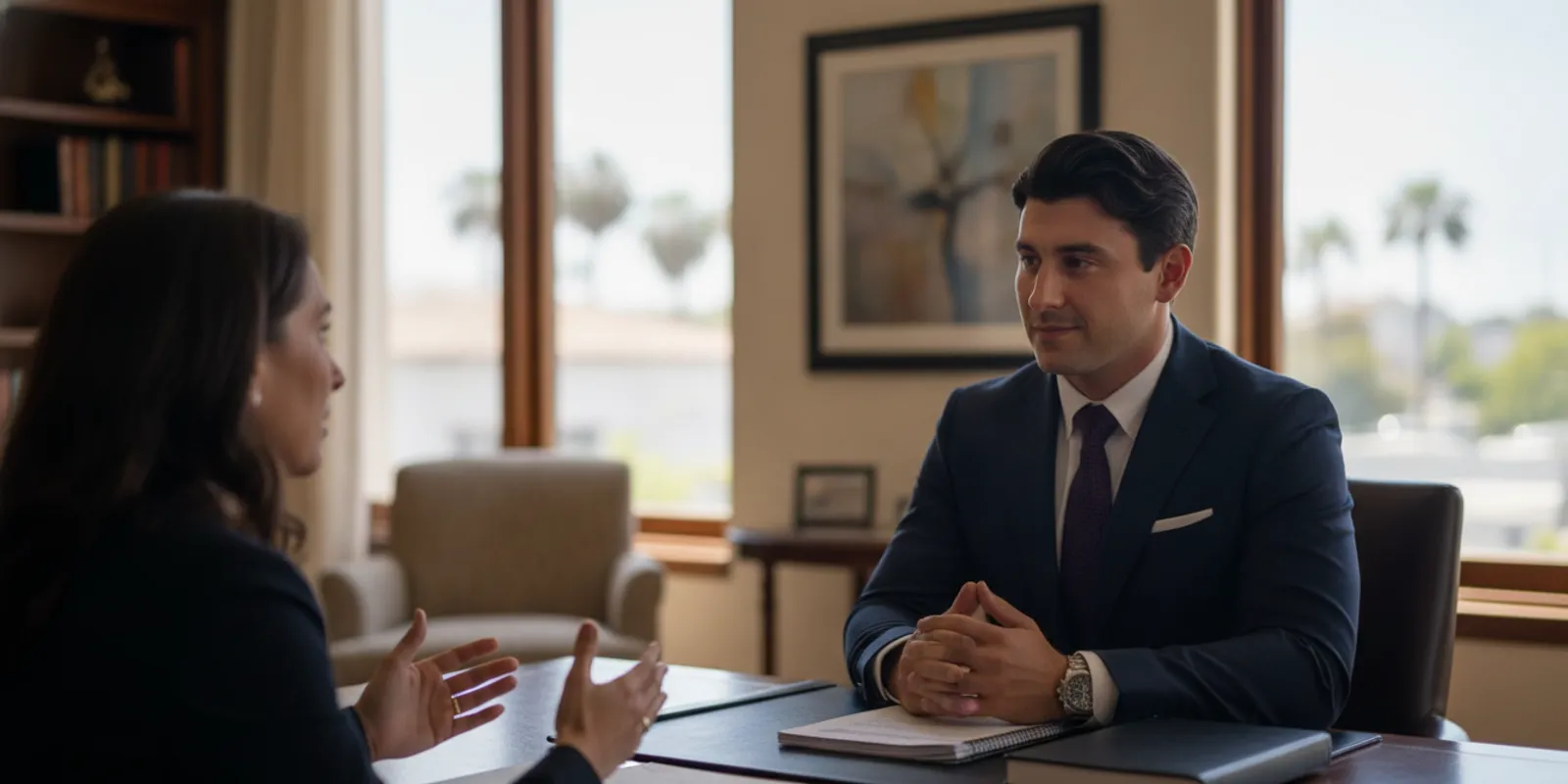
A case evaluation is a chance to explain what happened and ask whether the firm may be able to help. It is also your opportunity to decide whether you are comfortable with the attorney's communication style and proposed process. You are not expected to arrive with every document or to know the legal answer.
It can help to prepare a short timeline: the date and location of the crash, what you recall about how it happened, the people or vehicles involved, and the steps taken afterward. Bring or have available any documents you already possess, such as insurance letters, photographs, a collision report, or information about vehicle damage. Do not delay asking questions just because some records are missing.
Be candid about what you know and what you are unsure about. If you have already spoken with an insurer or signed paperwork, mention that during the conversation so the attorney can understand the context. The attorney may ask follow-up questions or explain that more information is needed before making an assessment.
To stay organized, group your notes into three short lists: what happened, what has happened since, and what you want to ask. Include contact information for any insurer or other party that has communicated with you, but do not try to reconstruct details you cannot remember. If dates or descriptions are approximate, say so. Clear uncertainty is more useful than presenting a guess as a fact.
At the end of the conversation, ask what the next step would be if you decide to proceed, what documents the firm would need, and when you should expect to hear from someone. You can also ask whether the attorney needs additional time to review the available information before discussing possible options. A careful evaluation may identify unanswered questions; that does not mean you must reach a conclusion during the initial discussion.
Mamanne Law offers consultations in person and virtually, and its team can communicate in English and Spanish. To ask about an evaluation or the firm's process, use the request-a-call-back page or review the firm's contact options.
What should you ask before choosing a car accident lawyer?
Keep the conversation practical. These questions can help you understand whether a firm's approach is a fit:
- Will I have direct access to the attorney responsible for the case strategy?
- How will you explain developments, and whom should I contact with questions?
- What work do you expect to do first, and what information might change that plan?
- How could you help with insurance communications, property damage, and case paperwork?
- How does the fee agreement address fees and expenses?
- What should I expect next if I decide to work with your firm?
Look for answers that acknowledge uncertainty where it exists. A responsible discussion can explain what the attorney knows, what remains unclear, and what the next step may be. Be cautious of anyone who guarantees compensation, names a specific case value without a proper evaluation, or pressures you to make a decision before you understand the agreement.
You can also notice how the conversation feels. Does the attorney let you finish describing your concern? Are unfamiliar terms explained? Does the firm distinguish between what it knows and what still needs review? A respectful discussion should leave room for you to ask questions and consider the written terms. If you feel rushed or do not understand the proposed process, ask for clarification before making a decision.
Frequently Asked Questions
Can I speak directly with the attorney handling my case?
Ask each firm how attorney access works in practice and who handles strategy, updates, and questions. At Mamanne Law, Benjamin Mamanne is personally involved in every case from start to finish.
Does a case evaluation mean I have to hire the firm?
No. An evaluation is a conversation to discuss the situation, ask questions, and learn about the firm's process. Review any representation agreement carefully before deciding whether to sign it.
Do I need every document before contacting a lawyer?
No. Share what you know and explain what records are not yet available. The attorney can tell you what information may be useful to gather next.
Can a lawyer tell me how much my claim is worth?
No reliable amount can be promised from a brief description. The facts, available evidence, injuries, and other issues may need careful review, and no outcome is guaranteed.
Does Mamanne Law serve people outside Woodland Hills?
The firm serves clients across California, with a primary focus on Northridge, the San Fernando Valley, and Greater Los Angeles. You can ask the firm whether it can assist with your situation and location.
Contact Mamanne Law to discuss your questions
Choosing a lawyer is a personal decision, and you deserve a clear explanation of who will handle your case, how communication works, and what the fee agreement says before you move forward.