
Articles · General information
What Evidence Matters After a California 18-Wheeler Crash?
After a collision with a commercial truck, it can be hard to know what to document or who may hold important records. This guide to 18 wheeler accident evidence california explains what may help clarify the events, how to preserve what you can safely access, and what to ask about next. Evidence varies by crash, and no single item determines responsibility on its own.
Why can evidence after an 18-wheeler crash be more complex?
A large-truck collision may involve more than the truck and another vehicle. Depending on the facts, records could relate to the driver, the motor carrier, the vehicle owner, a maintenance provider, a cargo handler, or another road user. More than one party or insurer may have information to review. Those possibilities are not conclusions about any particular crash.
The vehicles may also hold different kinds of information. A commercial truck can have electronic systems that record operating data, and the carrier may hold dispatch, inspection, or maintenance records. Witnesses, nearby businesses, public agencies, and insurers may each have separate records. Some information may be overwritten, lost, or changed through ordinary processes, so prompt identification and preservation can matter.
Evidence needs context. A photograph can show where vehicles ended up, but it may not explain how they got there. A vehicle data point may capture a limited time window, but it does not necessarily tell the full story. Investigators compare different sources rather than treating a single record as a complete account.
For an overview of the firm's work involving commercial vehicle crashes, see Mamanne Law's truck accident information. The article What a Truck Accident Claims Lawyer Does After a California Crash also explains how claim review may be organized.
What kinds of evidence may help explain the crash?
The relevant evidence depends on how the collision occurred and what questions remain. A useful starting point is to group records by what they may help establish: the scene and sequence of events, the truck's operation and condition, the driver's activity, the carrier's role, and the injuries and losses being documented.
| Evidence category | What it may help clarify | Practical preservation step |
|---|---|---|
| Scene photographs and video | Vehicle positions, damage, roadway layout, signs, debris, visibility, and nearby conditions | Keep original files and note when and where they were taken |
| Witness and camera records | What people nearby observed or what a camera captured before or after impact | Record witness contact details; identify cameras promptly without trespassing |
| Truck and vehicle data | Selected information about movement or vehicle systems, if available and relevant | Ask an attorney about appropriate preservation steps before data changes |
| Driver and carrier documents | Trip activity, dispatch, inspections, maintenance, or other operational details | List the documents that may exist; avoid trying to access private systems |
| Medical and wage records | Care received, symptoms reported, work missed, and related expenses | Keep copies of records and a dated log of symptoms and missed work |
| Official and insurance records | Reported facts, claim communications, and the status of related investigations | Save report details, letters, emails, and claim reference numbers |
This table is a checklist, not a prediction about what will be available or decisive. Some records may not exist, may be held by someone else, or may not be relevant to a specific collision.
What should you document at the scene?
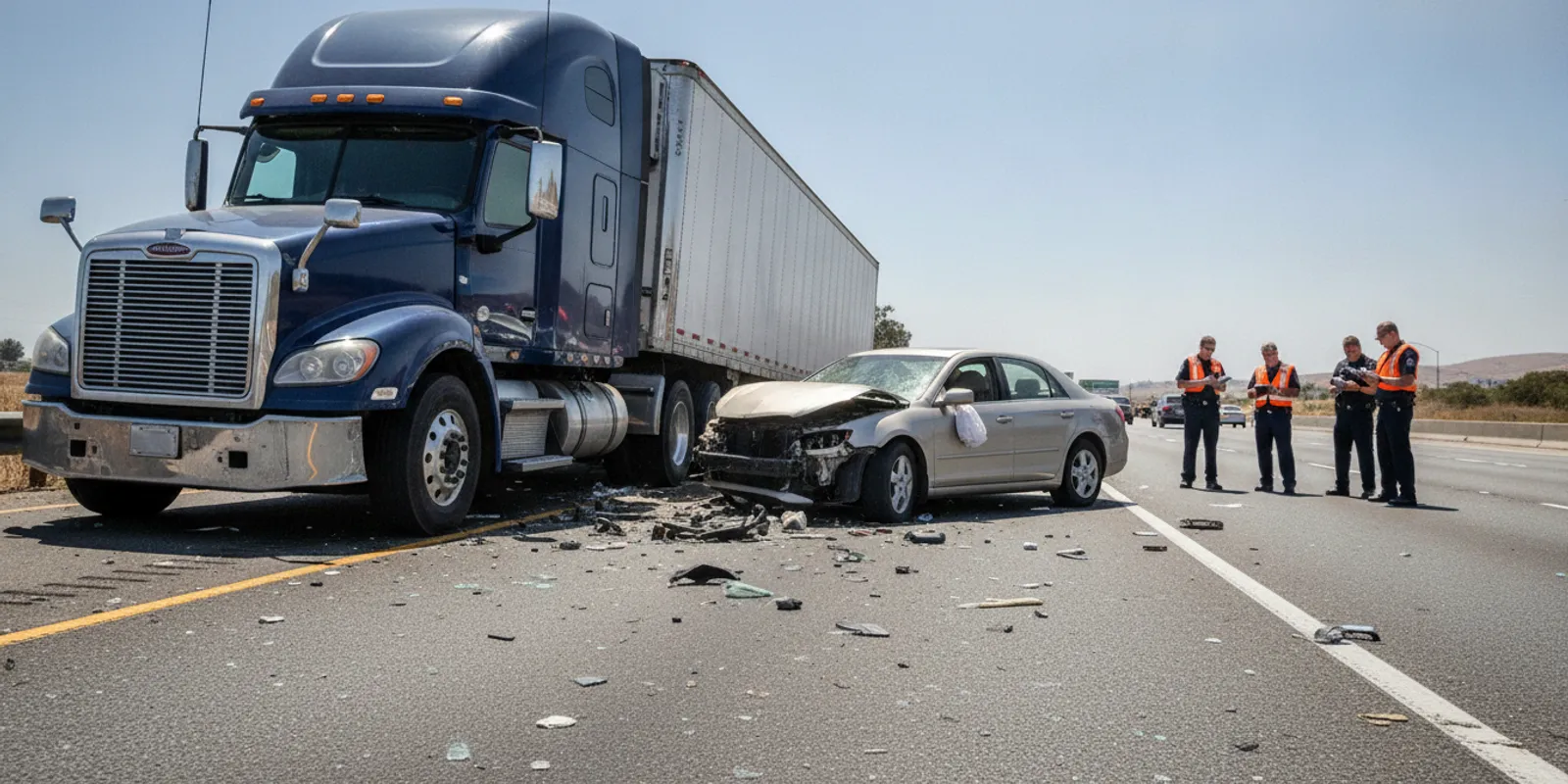
Your safety and medical needs come first. Call emergency services when appropriate and follow instructions from responders. Do not enter traffic, approach an unstable vehicle, or take a photograph if doing so could put you at risk. If you cannot document the scene yourself, someone else may be able to help when it is safe.
- Photograph the vehicles from safe positions, including overall views and visible damage. Capture license plates and identifying numbers only if you can do so safely.
- Record the date, approximate time, location, direction of travel, weather, lighting, and road conditions as you remember them.
- Note the positions of vehicles, traffic signals or signs, lane markings, skid marks, debris, and any visible obstructions. Do not move evidence to improve a photograph.
- Get names and contact details for witnesses, if they are willing to share them. Write down what they say in their own words and distinguish their statements from your own observations.
- Save dash-camera or phone video in its original form. If a device loops or automatically deletes recordings, preserve the relevant file promptly without editing it.
- Look for nearby cameras from businesses, residences, transit, or public agencies. Note their locations and the direction they face. Do not enter private property or demand access.
Keep a simple timeline while your memory is fresh. Include when you noticed the truck, what happened immediately before impact, the collision sequence as you recall it, and what happened afterward. Mark uncertain details as uncertain rather than filling gaps with guesses. If your recollection changes later, keep the original note and add a dated update instead of silently rewriting it.
The firm's general guide What to Do After a Car Accident in California covers additional early documentation steps that may also be relevant after a truck collision. For a broader explanation of the claim process, see the personal injury information page.
Why can truck records and electronic data matter?
A commercial truck may contain electronic systems that record some operating information. Depending on the vehicle and the question being investigated, relevant sources could include an event data recorder, engine or telematics data, GPS or fleet tracking, or video systems. The presence, type, scope, retention period, and accessibility of data vary. It is not safe to assume that every truck has the same systems or that any one system recorded the crash.
Other records may help put electronic information in context. For example, dispatch or route records may help establish where a trip was scheduled to go. Inspection and maintenance records may address the vehicle's condition at particular times. Driver schedules or work records may be relevant to activity during a period. These examples do not establish that a rule was violated or that a record will answer the cause of a crash.
Preservation is especially important because electronic information can be subject to routine retention and reuse. A person outside the company may not be able to access or copy those systems. Do not try to connect to, remove, or alter equipment. A lawyer can assess what information may be relevant and how to request that it be preserved through appropriate channels.
When discussing a collision, keep notes about the vehicle's identifying details, such as the carrier name, unit number, license plate, and any trailer information that was visible. Share only details you actually observed, and distinguish a clear observation from a guess. If you have the truck's photographs or a report number, preserve the original file or paperwork.
What driver, carrier, or maintenance documents could be relevant?
Not every truck crash involves a driver or company issue. When the circumstances make those questions relevant, investigators may seek records about the trip, the vehicle, and the work being performed. Depending on the matter, records could include dispatch messages, delivery or pickup details, inspection forms, maintenance history, driver qualification materials, training records, or schedules. Access and relevance depend on the facts and applicable processes.
There may also be questions about who owned the truck or trailer, who operated it, and who arranged the shipment. A company name printed on a vehicle may be a useful lead, but it does not by itself answer who is legally responsible. More than one business may have a role, or a company that appears connected may not be involved in the way a reader expects. The relationships must be checked against actual records.
Try not to contact multiple companies or attempt to collect internal records on your own. Keep any letters, claim forms, emails, or messages you receive. Note who contacted you, when, the subject of the communication, and any response deadlines stated in the document. If you are unsure what a document means, seek advice specific to your situation before taking a step that may affect your rights.
To learn how to compare counsel for a commercial-vehicle matter, you can read How to Find the Right Truck Accident Law Firm. Mamanne Law describes its approach as attorney-led, with Benjamin Mamanne personally involved in case strategy and client communication; more about him is available on the Meet Benjamin Mamanne page.
How can you preserve medical and financial records?
Medical records can help document care and symptoms after a collision. Keep discharge instructions, appointment details, test results, prescriptions, referrals, and bills you receive. If you continue to experience symptoms, make a dated note describing what you notice and how it affects your regular activities. This log is a memory aid, not a substitute for discussing symptoms with a medical professional.
Follow the care plan provided by your treating professionals and raise health questions with them. Do not delay needed care to gather evidence. If you already had a condition or prior injury, do not omit it from medical conversations. Accurate information can help your providers understand your health history and current needs.
Keep pay records, work schedules, leave notices, or other documents that show time away from work, if applicable. Save receipts and correspondence related to expenses connected with the collision. Avoid estimating amounts from memory when records may be available; mark an amount as an estimate if you are organizing information before receiving documentation.
Store records in a secure place and keep originals where possible. A simple folder organized by date can make it easier to find a record later. Preserve emails and texts in their original form, and back up photos and video. Do not post medical details, crash speculation, or images of the event publicly while facts are still being reviewed.
Which official and insurance records should you keep?
Write down the responding agency, incident or report number, and the process for asking about a report. A report can be an important starting point, but it may reflect only information available to the officer at that time. It is not necessarily a final account of every fact or a determination of civil responsibility. For California Highway Patrol information and agency resources, visit the California Highway Patrol website.
Keep letters, emails, forms, and claim numbers from insurers or other companies. Save envelopes when a document's mailing date may matter. If someone asks you to provide a recorded statement, sign a document, or authorize access to records, take time to understand the request and consider getting advice about your circumstances before responding. This article cannot tell you what to say or whether to accept a particular request.
Avoid guessing about speed, distance, or the exact sequence if you are unsure. You can state what you personally recall and identify what you do not know. Keep a copy of anything you submit, along with the date and method of delivery. The article Should You Give an Insurance Adjuster a Recorded Statement in California? discusses questions that may arise around recorded statements.
What evidence is useful to discuss during a case evaluation?
A clear, organized account can help an attorney understand what is known and what remains uncertain. You do not need to solve the crash yourself or arrive with every record collected. Consider bringing or listing:
- The date, location, and a short timeline of the collision.
- Names of responding agencies and any report or claim numbers.
- Photographs, video, witness contact details, and any notes you made.
- Information identifying the truck, carrier, trailer, or other vehicles, if known.
- Medical provider names and the dates of care, plus records you already have.
- Insurer communications, requests you received, and any dates mentioned in them.
- Questions about evidence that might be held by a carrier, a camera operator, or another person.
Be candid about gaps or conflicting accounts. If you do not know a detail, say so. If you have received a notice or deadline, point it out and share the document. An attorney can review the information, explain potential next steps, and assess what additional records may warrant attention. A review does not guarantee that evidence exists or that a claim will succeed.
Mamanne Law serves clients across California, with a focus on Northridge, the San Fernando Valley, and Greater Los Angeles. The firm describes its work as supporting clients from claims reporting and investigation through case resolution, with Benjamin Mamanne directly involved in case communication and strategy. Learn more about the firm's approach on its about page.
What is a practical next step?
Keep the materials you already have, make a dated list of questions, and avoid accessing or changing anyone else's property or records. If the collision caused an injury, you can discuss the situation and possible evidence-preservation concerns with an attorney. For contact options, including a request for a call back, visit Mamanne Law's callback page.
Contact Mamanne Law to discuss your crash
Frequently Asked Questions
Do all 18-wheelers have a black box?
No. Equipment and data systems vary by truck, and the term “black box” can refer to different devices or records. An attorney or qualified investigator can assess whether a particular vehicle may have relevant data and how it may be preserved.
Can I get the trucking company's records myself?
You may not have direct access to a company's internal records or vehicle systems. Keep relevant identifying details and communications, and ask an attorney about appropriate ways to request preservation or obtain records. Do not enter restricted property or access private systems.
Is a police or CHP report enough to prove what happened?
A report may contain useful information, but it may not include every witness, record, or technical detail. It is one source to consider alongside photographs, vehicle information, medical records, and other material. A report alone should not be treated as a complete finding about responsibility.
What if I did not take pictures at the scene?
You can still preserve what you have, such as messages, dash-camera footage, medical records, or notes about what you remember. Write down the names of witnesses or the locations of nearby cameras if you know them. Do not create details to fill in what you cannot recall.
How soon should evidence be preserved?
Timing can matter because some video or electronic records may be retained for a limited period or overwritten through routine operations. The appropriate timing and method depend on the evidence and circumstances. If you are concerned about a particular record, raise it promptly during a case evaluation.
After a California 18-wheeler crash, an organized record of what you observed, what you received, and what remains unknown can help guide a careful review. Prioritize safety and medical care, preserve original materials, and seek guidance tailored to the facts of your situation.